Collaborative Code Editors for React & JavaScript Projects
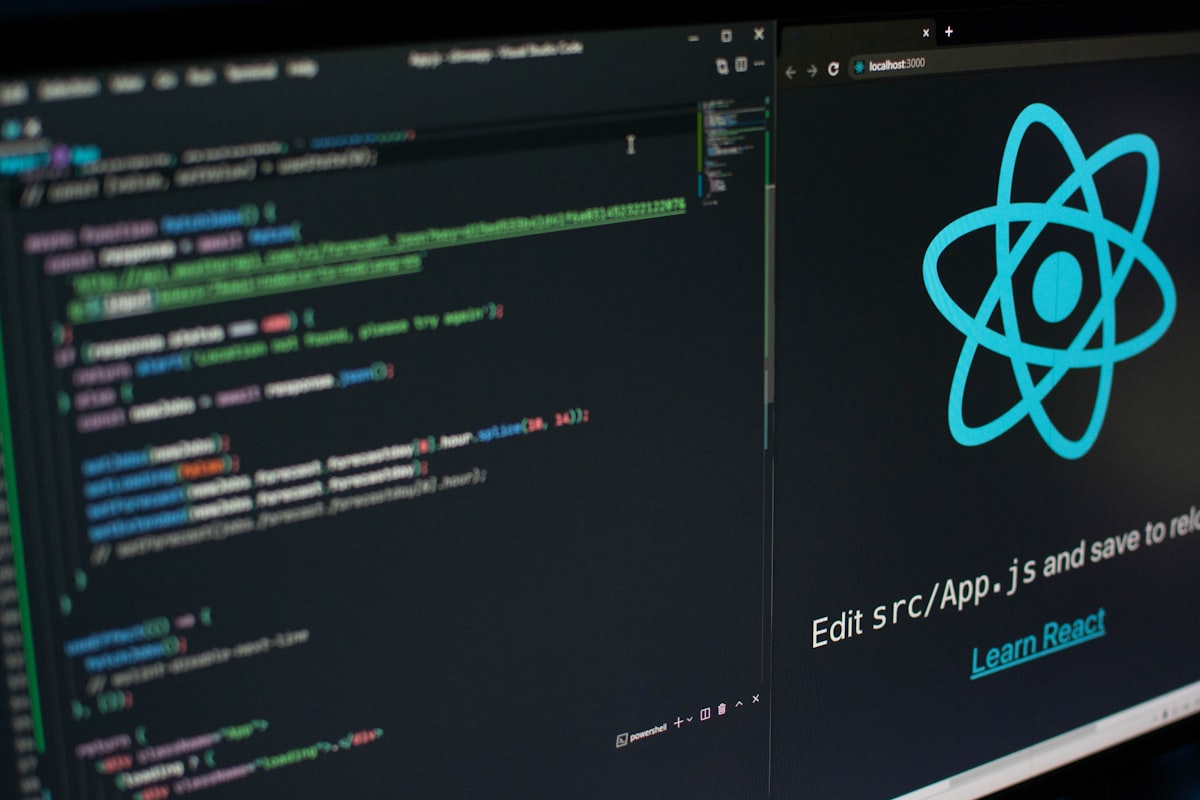
Modern frontend engineering relies heavily on extremely complex state management flows, component lifecycles, and asynchronous data fetching. When a useEffect hook starts infinitely looping because of a missing dependency, or when a massive global Redux state object mutates unexpectedly, getting a second pair of eyes on the JavaScript logic immediately is absolutely critical.
What is a collaborative JavaScript editor?
A collaborative JavaScript editor is a real-time text synchronization tool that allows multiple frontend developers to review, format, and modify raw JavaScript and TypeScript architecture simultaneously over a low-latency network connection without compiling the code locally.
In this guide
The danger of executable sandboxes
There are countless tools on the market designed for frontend developers that spin up miniature Node.js servers or Webpack bundlers directly in the browser. While platforms like CodeSandbox or StackBlitz are fantastic when you explicitly need to render DOM outputs visually and test CSS animations, they introduce significant cognitive overhead.
They often require complex environment configurations, NPM module installations, and heavy initialization times that take minutes to boot. Sometimes, you strictly need to review the underlying logical architecture of your JavaScript state management array without forcing a colleague to wait for an entire virtual machine to compile dependencies.
Native TypeScript and JSX parsing
Writing modern frontend code without sophisticated tooling is incredibly difficult. If you try to paste a heavily-typed TypeScript interface or a nested React JSX component into a generic text bin, the lack of bracket pairing and syntax coloring makes it unreadable.
Because the LiveCodeShare platform is built on the Monaco Engine, your Typescript interfaces, generics, and nested TSX component structures receive first-class treatment. The editor applies contextual syntax coloring to distinguishing standard JavaScript primitives from React-specific syntax. When you close a <div>, the editor automatically aligns it, allowing you and your team to restructure complex UI trees quickly.
Debugging asynchronous React hooks
One of the most challenging aspects of modern React is managing the asynchronous nature of useMemo, useCallback, and custom hooks. Often, resolving these issues requires structural refactoring—pulling logic outside of the component or changing how props are memoized.
Utilizing a real-time environment allows a Senior Frontend Engineer to jump into your file, highlight the exact dependency array causing the infinite re-render, and restructure the code block using multiple cursors alongside you. This eliminates the back-and-forth guessing games of static code reviews, vastly accelerating feature deployment.